• Skip to primary navigation
  • Skip to main content

Stanford Alliance for Primary Immunodeficiency

Stanford University

  • SAPI
  • Stanford PI Clinic
  • Patient Support
    • Diagnosis
    • Treatment and Complications
    • School
    • Work
    • Parenting
    • Sibling
    • Lifestyle
    • Mentorship Program
    • PI Resources
      • Immune Deficiency Foundation (IDF)
      • Jeffrey Modell Foundation
      • Painted Turtle Camp
      • Make-A-Wish
      • Baxter IVIG
      • CSL Behring IVIG
  • Kids’ Zone
    • Kids’ Zone
    • Pre-Teen FAQ
    • Teen FAQ
  • PID Research
    • Butte Lab Immunology Research Projects
    • PID Research blog
  • Local Events
  • Donate
You are here: Home / Archives for Manish Butte

Manish Butte

N-wasp is essential for the negative regulation of B cell receptor signaling.

July 16, 2014 By Manish Butte

Related Articles

N-wasp is essential for the negative regulation of B cell receptor signaling.

PLoS Biol. 2013 Nov;11(11):e1001704

Authors: Liu C, Bai X, Wu J, Sharma S, Upadhyaya A, Dahlberg CI, Westerberg LS, Snapper SB, Zhao X, Song W

Abstract
Negative regulation of receptor signaling is essential for controlling cell activation and differentiation. In B-lymphocytes, the down-regulation of B-cell antigen receptor (BCR) signaling is critical for suppressing the activation of self-reactive B cells; however, the mechanism underlying the negative regulation of signaling remains elusive. Using genetically manipulated mouse models and total internal reflection fluorescence microscopy, we demonstrate that neuronal Wiskott-Aldrich syndrome protein (N-WASP), which is coexpressed with WASP in all immune cells, is a critical negative regulator of B-cell signaling. B-cell-specific N-WASP gene deletion causes enhanced and prolonged BCR signaling and elevated levels of autoantibodies in the mouse serum. The increased signaling in N-WASP knockout B cells is concurrent with increased accumulation of F-actin at the B-cell surface, enhanced B-cell spreading on the antigen-presenting membrane, delayed B-cell contraction, inhibition in the merger of signaling active BCR microclusters into signaling inactive central clusters, and a blockage of BCR internalization. Upon BCR activation, WASP is activated first, followed by N-WASP in mouse and human primary B cells. The activation of N-WASP is suppressed by Bruton’s tyrosine kinase-induced WASP activation, and is restored by the activation of SH2 domain-containing inositol 5-phosphatase that inhibits WASP activation. Our results reveal a new mechanism for the negative regulation of BCR signaling and broadly suggest an actin-mediated mechanism for signaling down-regulation.

PMID: 24223520 [PubMed – indexed for MEDLINE]

Powered by WPeMatico
Filed Under: Research

Agammaglobulinemia: causative mutations and their implications for novel therapies.

July 16, 2014 By Manish Butte

Related Articles

Agammaglobulinemia: causative mutations and their implications for novel therapies.

Expert Rev Clin Immunol. 2013 Dec;9(12):1205-21

Authors: Berglöf A, Turunen JJ, Gissberg O, Bestas B, Blomberg KE, Smith CI

Abstract
Agammaglobulinemias are primary (inherited) immunodeficiencies characterized by the lack of functional B-cells and antibodies, and are caused by mutations in genes encoding components of the pre-B-cell or B-cell receptor, or their signaling pathways. The known genetic defects do not account for all agammaglobulinemic patients, suggesting that novel mutations underlying the disease remain to be found. While efficient, the current life-maintaining therapy with immunoglobulins and antibiotics is non-curative, prompting research into alternative treatment strategies that aim at rescuing the expression of the affected protein, thus giving rise to functional B-cells. These include gene therapy, which could be used to correct the defective gene or replace it with a functional copy. For a number of genetic defects, another alternative is to modulate the splicing of the affected transcripts. While these technologies are not yet ready for clinical trials in agammaglobulinemia, advances in genomic targeting are likely to make this option viable in the near future.

PMID: 24215410 [PubMed – indexed for MEDLINE]

Powered by WPeMatico

Filed Under: Research

primary immunodeficiency NOT human immunodeficiency virus; +40 new citations

July 1, 2014 By Manish Butte

40 new pubmed citations were retrieved for your search.
Click on the search hyperlink below to display the complete search results:

primary immunodeficiency NOT human immunodeficiency virus

These pubmed results were generated on 2014/07/01

PubMed, a service of the National Library of Medicine, includes over 15 million
citations for biomedical articles back to the 1950’s.
These citations are from MEDLINE and additional life science journals.
PubMed includes links to many sites providing full text articles and other related resources.

Powered by WPeMatico

Filed Under: Research

SAPI participates in the Packard Summer Scamper

June 22, 2014 By Manish Butte

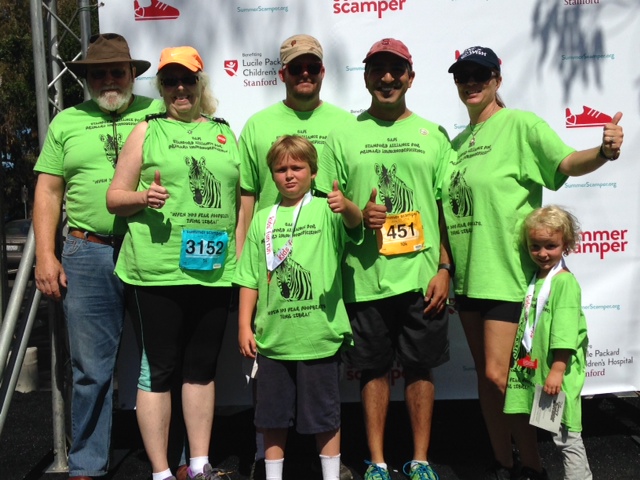
SAPI participates in the Packard Summer Scamper. We hosted a booth, answering questions about immune deficiencies. Lynn ran the 5k race, and Dr. Butte ran the 10k race.

SAPI Summer Scamper 2014

Filed Under: local events, walk

Deficient Production of Reactive Oxygen Species Leads to Severe Chronic DSS-Induced Colitis in Ncf1/p47phox-Mutant Mice.

June 1, 2014 By Manish Butte

Related Articles

Deficient Production of Reactive Oxygen Species Leads to Severe Chronic DSS-Induced Colitis in Ncf1/p47phox-Mutant Mice.

PLoS One. 2014;9(5):e97532

Authors: Rodrigues-Sousa T, Ladeirinha AF, Santiago AR, Carvalheiro H, Raposo B, Alarcão A, Cabrita A, Holmdahl R, Carvalho L, Souto-Carneiro MM

Abstract
BACKGROUND: Colitis is a common clinical complication in chronic granulomatous disease (CGD), a primary immunodeficiency caused by impaired oxidative burst. Existing experimental data from NADPH-oxidase knockout mice propose contradictory roles for the involvement of reactive oxygen species in colitis chronicity and severity. Since genetically controlled mice with a point-mutation in the Ncf1 gene are susceptible to chronic inflammation and autoimmunity, we tested whether they presented increased predisposition to develop chronic colitis.
METHODS: Colitis was induced in Ncf1-mutant and wild-type mice by a 1st 7-days cycle of dextran sulfate sodium (DSS), intercalated by a 7-days resting period followed by a 2nd 7-days DSS-cycle. Cytokines were quantified locally in the colon inflammatory infiltrates and in the serum. Leukocyte infiltration and morphological alterations of the colon mucosa were assessed by immunohistochemistry.
RESULTS: Clinical scores demonstrated a more severe colitis in Ncf1-mutant mice than controls, with no recovery during the resting period and a severe chronic colitis after the 2nd cycle, confirmed by histopathology and presence of infiltrating neutrophils, macrophages, plasmocytes and lymphocytes in the colon. Severe colitis was mediated by increased local expression of cytokines (IL-6, IL-10, TNF-α, IFN-γ and IL-17A) and phosphorylation of Leucine-rich repeat kinase 2 (LRRK2). Serological cytokine titers of those inflammatory cytokines were more elevated in Ncf1-mutant than control mice, and were accompanied by systemic changes in functional subsets of monocytes, CD4+T and B cells.
CONCLUSION: This suggests that an ineffective oxidative burst leads to severe chronic colitis through local accumulation of peroxynitrites, pro-inflammatory cytokines and lymphocytes and systemic immune deregulation similar to CGD.

PMID: 24873968 [PubMed – in process]

Powered by WPeMatico

Filed Under: Research

SAPI Sponsors Ask an Immunologist Day

May 31, 2014 By Manish Butte

Dr. Butte spoke at the second SAPI-sponsored event, an Ask and Immunologist Day held at Lucile Packard Children’s Hospital Stanford Auditorium.

He spoke about adult immune deficiencies (e.g,. CVID). His slides are here.

Filed Under: local events, talk

Implications to payers of switch from hospital-based intravenous immunoglobulin to home-based subcutaneous immunoglobulin therapy in patients with primary and secondary immunodeficiencies in Canada.

May 30, 2014 By Manish Butte

Related Articles

Implications to payers of switch from hospital-based intravenous immunoglobulin to home-based subcutaneous immunoglobulin therapy in patients with primary and secondary immunodeficiencies in Canada.

Allergy Asthma Clin Immunol. 2014;10(1):23

Authors: Gerth WC, Betschel SD, Zbrozek AS

Abstract
BACKGROUND: Switching primary/secondary immunodeficiency (PID/SID) patients from intravenous immunoglobulin (IVIg) to home-based subcutaneous immunoglobulin (SCIg) therapy reduces nurse time. A nurse shortage in Canada provides an important context to estimate the net economic benefit, the number of patients needed to switch to SCIg to recoup one full-time equivalent (FTE), and potential population-wide savings of reduced nurse time to a payer.
METHODS: The net economic benefit was estimated by multiplying the hourly compensation for nurses in Canada by the hours required for each administration route. The number needed to switch to SCIg to gain one nurse FTE was estimated by dividing the work hours in a year by the average annual savings in nursing time in a PID population in Canada. The prevalence of treated PID/SID in Canada was calculated using provincial IgG audit data to extrapolate the potential population-wide savings of switching patients to SCIg therapy.
FINDINGS: The net economic gain from switching one patient to home-based SCIg care would be C$2,603 (Canadian Dollars) in year 1 and C$2,948 each year thereafter. Switching 37 IVIg patients to SCIg would gain one nurse FTE. Switching 50% of the estimated 5,486 PID and SID patients in Canada receiving IVIg therapy to SCIg has the potential to save 223.3 nurse FTEs (C$23.2 million in labor costs).
CONCLUSIONS: A shift from IVIg to less labor-intensive SCIg has the potential to help alleviate nurse shortages and reduce overall health care costs in Canada. Health care professionals might consider advocating for home-based SCIg therapy for PID/SID patients when clinically appropriate.

PMID: 24872821 [PubMed]

Powered by WPeMatico

Filed Under: Research

Dietary gluten and the development of type 1 diabetes.

May 30, 2014 By Manish Butte

Related Articles

Dietary gluten and the development of type 1 diabetes.

Diabetologia. 2014 May 29;

Authors: Antvorskov JC, Josefsen K, Engkilde K, Funda DP, Buschard K

Abstract
Gluten proteins differ from other cereal proteins as they are partly resistant to enzymatic processing in the intestine, resulting in a continuous exposure of the proteins to the intestinal immune system. In addition to being a disease-initiating factor in coeliac disease (CD), gluten intake might affect type 1 diabetes development. Studies in animal models of type 1 diabetes have documented that the pathogenesis is influenced by diet. Thus, a gluten-free diet largely prevents diabetes in NOD mice while a cereal-based diet promotes diabetes development. In infants, amount, timing and mode of introduction have been shown to affect the diabetogenic potential of gluten, and some studies now suggest that a gluten-free diet may preserve beta cell function. Other studies have not found this effect. There is evidence that the intestinal immune system plays a primary role in the pathogenesis of type 1 diabetes, as diabetogenic T cells are initially primed in the gut, islet-infiltrating T cells express gut-associated homing receptors, and mesenteric lymphocytes transfer diabetes from NOD mice to NOD/severe combined immunodeficiency (SCID) mice. Thus, gluten may affect diabetes development by influencing proportional changes in immune cell populations or by modifying the cytokine/chemokine pattern towards an inflammatory profile. This supports an important role for gluten intake in the pathogenesis of type 1 diabetes and further studies should be initiated to clarify whether a gluten-free diet could prevent disease in susceptible individuals or be used with newly diagnosed patients to stop disease progression.

PMID: 24871322 [PubMed – as supplied by publisher]

Powered by WPeMatico

Filed Under: Research

Primary immunodeficiency disorders: general classification, new molecular insights, and practical approach to diagnosis and treatment.

May 30, 2014 By Manish Butte

Related Articles

Primary immunodeficiency disorders: general classification, new molecular insights, and practical approach to diagnosis and treatment.

Ann Allergy Asthma Immunol. 2014 Jun;112(6):489-495

Authors: Ochs HD, Hagin D

PMID: 24860921 [PubMed – as supplied by publisher]

Powered by WPeMatico

Filed Under: Research

[Survival analysis of hematopoietic stem cell transplantation in children with primary immunodeficiency in Spain.]

May 30, 2014 By Manish Butte

Related Articles

[Survival analysis of hematopoietic stem cell transplantation in children with primary immunodeficiency in Spain.]

An Pediatr (Barc). 2014 May 22;

Authors: Hladun R, Badell I, González M, Martínez AM, Sánchez de Toledo J, Olivé MT, González ME, Elorza I, Díaz de Heredia C, por el Grupo Español de Trasplante de Médula Ósea en Niños (GETMON)

Abstract
INTRODUCTION: Children with primary immunodeficiency have severe life-threatening infections and a higher prevalence of autoimmune problems, allergy and lymphoproliferative disorders. Allogenic hematopoietic stem cell transplantation has been the only potentially curative option.
PATIENTS AND METHODS: Patients with primary immunodeficiency underwent allogenic stem cell transplantation in the period 1985-2011, and registered in the Spanish Working Party for Bone Marrow Transplantation in Children.
RESULTS: One hundred and fifty nine patients underwent 173 allogenic stem cell transplantations, of whom 97 had severe combined immunodeficiency, 30 with immune dysregulation disorders, 25 Wiskott-Aldrich syndrome, and 21 phagocyte disorders. The median patient age at diagnosis was 6 months (range: 17 days – 168 months) and the median patient age at transplant was 12 months (range: 1 month – 189 months). The donors were 30 (19%) identical siblings, 40 (25%) alternative family donors, and 89 (56%) unrelated donors. The source of stem cells was bone marrow in 68 (43%), cord blood in 52 (33%), and peripheral blood in 39 (24%). Ninety eight (61.6%) are alive, 57 (35.9%) died. Event-free survival at 10 years was 63%, with 90% for children transplanted from identical siblings, 36% for those transplanted from alternative family donors, and 66% for those transplanted from unrelated donors.
CONCLUSIONS: The best results have been obtained with identical siblings, but other options may be considered.

PMID: 24857430 [PubMed – as supplied by publisher]

Powered by WPeMatico

Filed Under: Research

  • « Go to Previous Page
  • Page 1
  • Interim pages omitted …
  • Page 705
  • Page 706
  • Page 707
  • Page 708
  • Page 709
  • Interim pages omitted …
  • Page 712
  • Go to Next Page »

Copyright © 2026 · Genesis Framework by StudioPress · WordPress · Log in