Are there any blood tests to help determine risks for autoimmune disorders before one manifests?
Blog
Gene testing
How can you determine the gene(s) involved?
Are complement deficiencies really rare? Overview on prevalence, clinical importance and modern diagnostic approach.
 |
Related Articles |
Are complement deficiencies really rare? Overview on prevalence, clinical importance and modern diagnostic approach.
Mol Immunol. 2014 Oct;61(2):110-7
Authors: Grumach AS, Kirschfink M
Abstract
Complement deficiencies comprise between 1 and 10% of all primary immunodeficiencies (PIDs) according to national and supranational registries. They are still considered rare and even of less clinical importance. This not only reflects (as in all PIDs) a great lack of awareness among clinicians and general practitioners but is also due to the fact that only few centers worldwide provide a comprehensive laboratory complement analysis. To enable early identification, our aim is to present warning signs for complement deficiencies and recommendations for diagnostic approach. The genetic deficiency of any early component of the classical pathway (C1q, C1r/s, C2, C4) is often associated with autoimmune diseases whereas individuals, deficient of properdin or of the terminal pathway components (C5 to C9), are highly susceptible to meningococcal disease. Deficiency of C1 Inhibitor (hereditary angioedema, HAE) results in episodic angioedema, which in a considerable number of patients with identical symptoms also occurs in factor XII mutations. New clinical entities are now reported indicating disease association with partial complement defects or even certain polymorphisms (factor H, MBL, MASPs). Mutations affecting the regulators factor H, factor I, or CD46 and of C3 and factor B leading to severe dysregulation of the alternative pathway have been associated with renal disorders, such as atypical hemolytic uremic syndrome (aHUS) and – less frequent – with membranoproliferative glomerulonephritis (MPGN). We suggest a multi-stage diagnostic protocol starting based on the recognition of so called warning signs which should aid pediatricians and adult physicians in a timely identification followed by a step-wise complement analysis to characterize the defect at functional, protein and molecular level.
PMID: 25037634 [PubMed – indexed for MEDLINE]
Powered by WPeMatico
Exon first nucleotide mutations in splicing: evaluation of in silico prediction tools.
  |
Related Articles |
Exon first nucleotide mutations in splicing: evaluation of in silico prediction tools.
PLoS One. 2014;9(2):e89570
Authors: Grodecká L, Lockerová P, Ravčuková B, Buratti E, Baralle FE, Dušek L, Freiberger T
Abstract
Mutations in the first nucleotide of exons (E(+1)) mostly affect pre-mRNA splicing when found in AG-dependent 3′ splice sites, whereas AG-independent splice sites are more resistant. The AG-dependency, however, may be difficult to assess just from primary sequence data as it depends on the quality of the polypyrimidine tract. For this reason, in silico prediction tools are commonly used to score 3′ splice sites. In this study, we have assessed the ability of sequence features and in silico prediction tools to discriminate between the splicing-affecting and non-affecting E(+1) variants. For this purpose, we newly tested 16 substitutions in vitro and derived other variants from literature. Surprisingly, we found that in the presence of the substituting nucleotide, the quality of the polypyrimidine tract alone was not conclusive about its splicing fate. Rather, it was the identity of the substituting nucleotide that markedly influenced it. Among the computational tools tested, the best performance was achieved using the Maximum Entropy Model and Position-Specific Scoring Matrix. As a result of this study, we have now established preliminary discriminative cut-off values showing sensitivity up to 95% and specificity up to 90%. This is expected to improve our ability to detect splicing-affecting variants in a clinical genetic setting.
PMID: 24586880 [PubMed – indexed for MEDLINE]
Powered by WPeMatico
Bone density and fractures in autosomal dominant hyper IgE syndrome.
 |
Related Articles |
Bone density and fractures in autosomal dominant hyper IgE syndrome.
J Clin Immunol. 2014 Feb;34(2):260-4
Authors: Sowerwine KJ, Shaw PA, Gu W, Ling JC, Collins MT, Darnell DN, Anderson VL, Davis J, Hsu A, Welch P, Puck JM, Holland SM, Freeman AF
Abstract
PURPOSE: Autosomal Dominant Hyper IgE Recurrent Infection Syndrome (AD-HIES) is caused by mutations in STAT3 and characterized by eczema, recurrent bacterial infections, and skeletal and connective tissue abnormalities. To further understand the minimal trauma fractures of AD-HIES, we examined bone mineral density (BMD) and laboratory markers of bone turnover.
METHODS: Patients with AD-HIES enrolled in a prospective natural history study were examined with dual x-ray absorptiometry (DEXA) scans and laboratory studies of bone metabolism. The number of fractures was recorded as well as clinical features of AD-HIES including scoliosis and retained primary teeth. Patients on medications with skeletal effects, including bisphosphonates, were examined separately.
RESULTS: Twenty-three AD-HIES children (6-18 years) and 33 AD-HIES adults (21-50 years) not receiving bone-active drugs were studied. Fourteen of the 23 children (61%) had histories of minimal trauma fractures, as did 26 of the 33 adults (79%). Osteopenia or osteoporosis was found in 79% of children and adults. Only radial BMD correlated with the qualitative occurrence of fractures but it did not correlate with the numbers of fractures. Markers of bone metabolism did not correlate with minimal trauma fractures or BMD. Patients on bone-active medications had improved BMD, but still sustained fractures.
CONCLUSIONS: Minimal trauma fractures and decreased BMD are common in AD-HIES. Low radial BMD is associated with fractures, but hip and spine BMD are not. Treatment with bisphosphonates increased BMD but its role in fracture prevention remains undefined.
PMID: 24402620 [PubMed – indexed for MEDLINE]
Powered by WPeMatico
Safety monitoring of the intravenous immunoglobulin preparation Intratect® in primary and secondary immunodeficiencies: a prospective non-interventional study.
Safety monitoring of the intravenous immunoglobulin preparation Intratect® in primary and secondary immunodeficiencies: a prospective non-interventional study.
Int J Clin Pharmacol Ther. 2014 Oct 27;
Authors: Bauhofer A, Dietrich RL, Schmeidl R
Abstract
Objectives: To better characterize the risk profile of the intravenous immunoglobulin (IVIG) Intratect®, a non-interventional study was undertaken to systematically collect large-scale safety information under real-life conditions in patients with primary and secondary immunodeficiency. Secondary objectives were data on treatment modalities. Methods: A prospective, non-interventional study was performed at 95 centers. Results of an interim analysis are reported here. Intratect® (50 g/L) was administered at the physician’s discretion. Data were captured from patients with different causes of immunodeficiency (61.5% with malignancy) at routine clinic visits, with a particular focus on the frequency and causality of adverse events. Results: 1,313 patients were followed for a median of 294 days. At study entry, 836 patients (63.7%) were receiving therapy, most frequently IVIG treatment (37.2%). In total, 21,995 Intratect® infusions were documented (median 11 infusions per patient, median dose 200 mL). Median serum IgG level increased from 5.78 (interquartile range 3.70, 8.87) g/L at month 1 to 6.58 (4.82, 9.48) g/mL at month 12. Altogether, 689 adverse events were collected, irrespective of causality. From these, 225 (32.7%) were assessed as related to Intratect® and thus considered suspected adverse drug reactions (ADRs). Thus, the ADR rate was 1.0% per infusion. Seven ADRs (7/225, 3.1%) were graded serious. In all cases, the patients had recovered or were recovering at the time of reporting. Conclusions: Use of Intratect® for immunoglobulin substitution in primary and secondary immunodeficiency under real-life conditions is associated with a low rate of suspected ADRs. Serious ADRs are rare and manageable.
PMID: 25345431 [PubMed – as supplied by publisher]
Powered by WPeMatico
Alteration in humoral immunity is common among family members of patients with common variable immunodeficiency.
Alteration in humoral immunity is common among family members of patients with common variable immunodeficiency.
J Investig Allergol Clin Immunol. 2014;24(5):346-51
Authors: KarakocAydinerr E, Ozen AO, Baris S, Ercan H, Ozdemir C, Barlan IB
Abstract
BACKGROUND: The prevalence of primary immunodeficiency (PID) in the relatives of patients with common variable immunodeficiency (CVID) and IgA deficiency is high. Allergic disorders have been recorded in patients with humoral immunodeficiency. We aimed to determine the frequency of humoral immunodeficiency and atopy in the relatives of patients with CVID.
METHODS: The study population comprised 20 CVID patients and their relatives. All relatives were screened using a questionnaire covering demographic characteristics, warning signs of PID (adults and children), and core questions on asthma, rhinitis, and eczema from the International Study of Asthma and Allergies in Childhood (ISAAC). We also recorded absolute neutrophil and lymphocyte counts, serum immunoglobulin levels, pulmonary function values, and skin prick test results.
RESULTS: The study sample comprised 20 patients with CVID (15 males, 5 females; mean (SD] age, 16.4 (9] years) and 63 first-degree relatives (18 mothers, 16 fathers, 16 sisters, 10 brothers, and 3 offspring). The rate of parental consanguinity was 75%. Of 17 family members with positive PID warning signs, 6 had concomitant hypogammaglobulinemia (3 low IgM levels, 2 selective IgA deficiency, and 1 partial IgA deficiency). The ISAAC questionnaire revealed allergic rhinitis in 3 mothers, asthma in 2 fathers, and 1 sibling. Skin prick testing revealed sensitization to aeroallergens in 31.6% of cases in addition to 1 parent and 1 sibling.
CONCLUSIONS: Almost half of the 20 families with a CVID patient had at least 1 additional member with hypogammaglobulinemia, leading us to recommend routine screening for relatives of CVID patients.
PMID: 25345305 [PubMed – in process]
Powered by WPeMatico
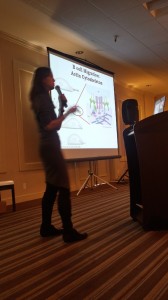
Dr. Butte and Dr. Elena Hsieh speak at IDF Family Conference Day
Liver transplantation in patients with common variable immunodeficiency: a report of two cases.
Liver transplantation in patients with common variable immunodeficiency: a report of two cases.
Ann Transplant. 2014;19:541-4
Authors: Montalti R, Mocchegiani F, Vincenzi P, Svegliati Baroni G, Nicolini D, Vivarelli M
Abstract
Background Common variable immunodeficiency (CVID) is the most common primary immunodeficiency disease and is a heterogeneous group of antibody deficiency syndromes characterized by hypogammaglobulinemia, recurrent bacterial infections, and frequent autoimmune manifestations. Liver transplantation (LT) is rarely performed in patients with CVID and associated end-stage liver disease. Case Report We report the successful results of 2 patients who underwent LT with pre-existing diagnosis of CVID. Case 1: A 21-year-old man affected by CVID and HCV-related cirrhosis underwent LT in December 2010 with a 67-year-old deceased donor liver graft. At the time of LT, MELD score was 30. The early post-LT course was characterized by a biliary stricture treated with Roux-en-Y repackaging of the anastomosis. Neither main infections nor acute rejection were detected during the postoperative period. After 43 months follow-up, the patient is alive and well with a histological recurrence of hepatitis C grade 1 and stage 2 according to Metavir staging. Case 2. On March 2013, a 53-year-old woman developed HBV-related fulminant liver failure and underwent urgent LT utilizing a 21-year-old deceased donor liver graft. The postoperative course was characterized by relaparotomy for hemoperitoneum. CMV infection was diagnosed 5 months after LT and resolved after valganciclovir therapy. After 6 months, mild acute rejection was diagnosed and treated with steroids. The patient is currently alive and well. The immunosuppressive regimen was based on Advagraf and early steroids discontinuation in both patients. Conclusions LT should not be precluded to patients with CVID and end-stage liver diseases. Immunosuppression has a key role in this category of patients to balance the higher risk of rejection and serious infections.
PMID: 25339509 [PubMed – in process]
Powered by WPeMatico
Serum immunoglobulins in 28 adults with autoimmune sensorineural hearing loss: increased prevalence of subnormal immunoglobulin G1 and immunoglobulin G3.
Serum immunoglobulins in 28 adults with autoimmune sensorineural hearing loss: increased prevalence of subnormal immunoglobulin G1 and immunoglobulin G3.
BMC Immunol. 2014 Oct 22;15(1):43
Authors: Bertoli LF, Pappas DG, Barton J, Barton JC
Abstract
BackgroundOur informal observations suggested that some patients with acute sensorineural hearing loss (ASNHL) have subnormal serum immunoglobulin (Ig) levels. We evaluated 28 consecutive adults (18 men, 10 women) at ASNHL diagnosis using: antibodies to 68 kD protein, 30 kD protein, and type II collagen; and serum total IgG, IgG subclasses, total IgA, and IgM. Reference ranges for Ig levels were mean¿±¿2 SD. We compared prevalences of subnormal IgG subclasses to those in 275 healthy European adults in previous reports. We also reviewed charts of consecutive adult index patients with primary Ig deficiency (35 common variable immunodeficiency, 406 IgG subclass deficiency) to identify other patients with probable ASHNL.ResultsMean age was 53¿±¿10 (SD) y. Six patients (21.4%) had other autoimmunity manifestations. Antibodies to 68 kD protein, 30 kD protein, and type II collagen were detected in 21.4% (6/28), 21.1% (4/19) and 18.8% (3/16), respectively. Three patients (10.7%) had subnormal IgG1, six (21.4%) had subnormal IgG3, and four (14.3%) had subnormal IgG1 and IgG3. Some had subnormal IgG2, IgG4, IgA, and IgM (n¿=¿1, 2, 3, and 1, respectively). Prevalences of subnormal IgG1 or IgG3 were greater in ASNHL patients (25.0% and 35.7%) than 275 controls (2.1% and 3.3%), respectively (p¿<¿0.0001, each comparison). Relative risks of subnormal IgG1 and IgG3 in ASNHL were 11.5 [95% CI: 4.1, 31.7] and 10.9 [4.8, 25.6], respectively. Hearing improved after initial therapy in 17 patients (60.7%). Multiple regressions on Ig levels revealed no significant associations with other available variables. Logistic regressions on initial therapy response revealed a positive association with men (p¿=¿0.0392) and a negative association with IgA (p¿=¿0.0274). Our estimated prevalence of probable ASNHL in 35 patients with common variable immunodeficiency during a follow-up interval of 8¿±¿4 y was 0% [95% CI: 0, 12.3%]). Prevalence of probable ASNHL in 406 patients with IgG subclass deficiency during the same interval was 0.74% [0.19, 2.33].ConclusionsSerum levels of IgG1 or IgG3 were subnormal in 46.4% of 28 patients with ASNHL. Among adults who present with primary Ig deficiency, some may have or later develop ASNHL.
PMID: 25339459 [PubMed – as supplied by publisher]
Powered by WPeMatico